Natural Sea Sponge
Natural Sea Sponge
There are bath and body products that are manufactured, and there are bath and body products that are simply found — grown by the natural world over years, harvested with care, and offered exactly as they are. A Natural Sea Sponge is the latter, and the difference between it and its synthetic counterparts is immediately and entirely apparent the first time it is used.
Sea sponges are among the oldest and most simple multicellular organisms on earth — living filter feeders that have existed in the world's oceans for over five hundred million years, long predating fish, insects, and almost every other form of complex life. What we use as a bath sponge is the dried, fibrous skeletal structure of this organism — a natural matrix of interconnected fibres that is simultaneously softer, more durable, more absorbent, and more sustainable than anything a factory has yet managed to replicate.
Found in the warm, clear waters of the Mediterranean, the Caribbean, and the Gulf of Mexico — with the finest bath-quality material historically sourced from the Greek islands and the Florida Keys — Natural Sea Sponges have been harvested and used for bathing since ancient Greece and Rome. Their enduring use across thousands of years of human hygiene is not sentiment. It is the simple, practical recognition that nature, given sufficient time, tends to produce better solutions than we do.
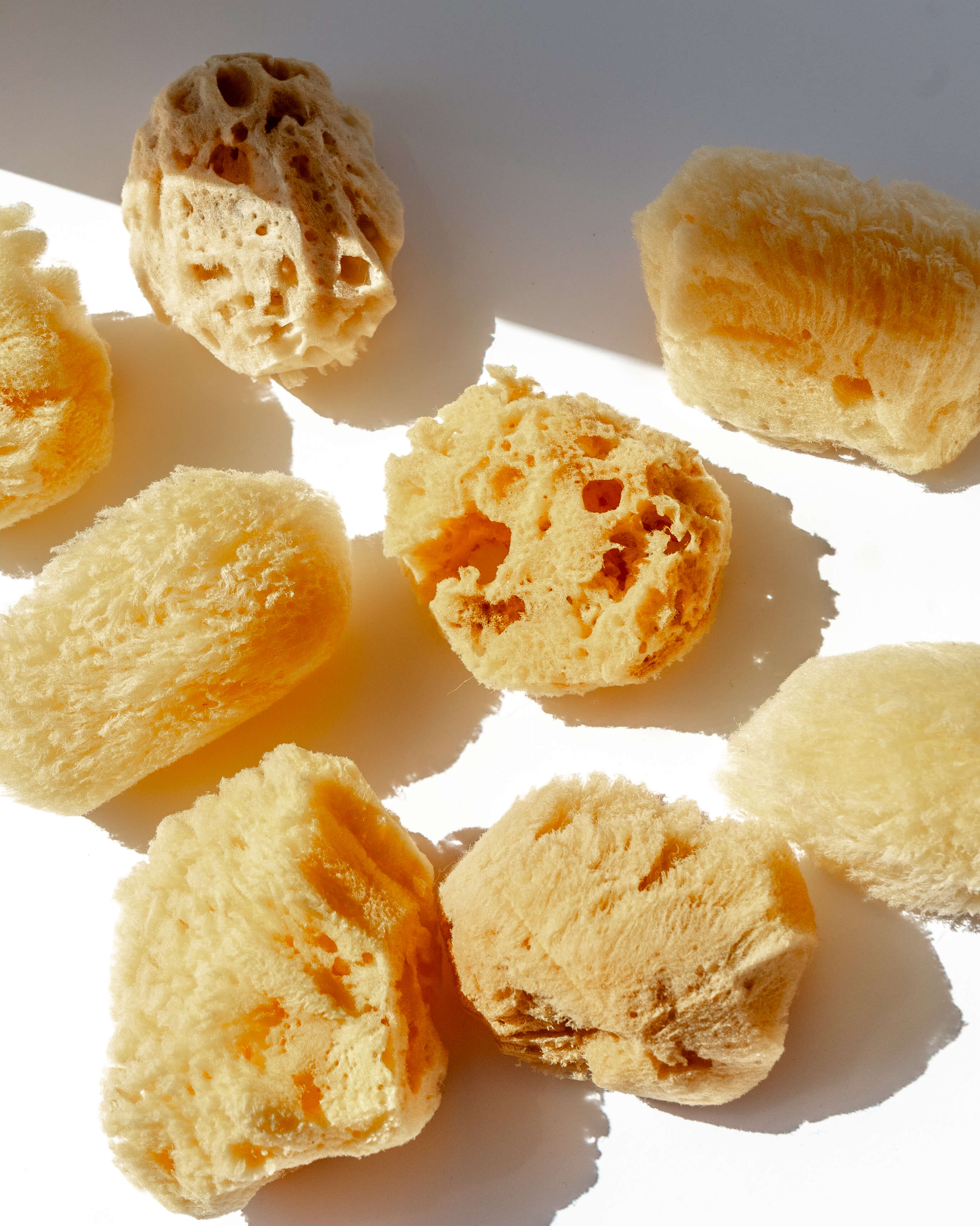
Each sponge is entirely individual — shaped by the particular conditions of its growth, the currents it filtered, and the years it took to reach its size. No two are identical in form, texture, or the particular quality of their fibre. This is not a limitation. It is the point.
Why Natural Over Synthetic
Synthetic sponges and loofahs are made from plastic or plant cellulose processed into a uniform, mass-produced form. They are inexpensive, consistent, and — in environmental, functional, and experiential terms — considerably inferior to the natural alternative.
Natural Sea Sponges are naturally hypoallergenic and free from the chemicals, dyes, and artificial binders present in synthetic products — making them ideal for sensitive, reactive, or delicate skin. Their fibre structure is uniquely gentle: firm enough to cleanse effectively, soft enough to use on the most sensitive areas without irritation.
They are naturally resistant to bacterial growth when properly cared for — their fibres containing enzymes that inhibit the growth of mould and bacteria in a way that synthetic sponges, which harbour microorganisms readily, cannot match. They last significantly longer than synthetic alternatives when given reasonable care. And at the end of their life, they biodegrade completely — returning to the ocean environment from which they came without leaving anything behind.
How to Use Your Natural Sea Sponge
- Rinse thoroughly in warm water before first use — the sponge will soften and expand considerably as it absorbs water, revealing its full size and softness
- Apply your preferred soap, body wash, or cleanser directly to the wet sponge and work into a lather before applying to the skin
- Use with gentle, circular motions — the natural fibre provides a mild, entirely natural exfoliation that removes dead skin cells and promotes circulation without the harshness of synthetic exfoliating products
- Rinse thoroughly after each use, squeeze out excess water gently — never wring — and allow to dry in a well-ventilated area away from direct sunlight
- Rinse occasionally in a dilute solution of water and white vinegar or baking soda to maintain freshness and extend the life of the sponge
- Replace when the fibre begins to break down or loses its structural integrity — a well-cared-for Natural Sea Sponge will last considerably longer than any synthetic alternative
Cleansing & Care
The key to a long-lasting Natural Sea Sponge is thorough rinsing and proper drying after every use. Squeeze — never wring — to remove excess water, and allow to air dry completely between uses in a place with good air circulation.
For a deeper clean, soak for ten minutes in a solution of warm water with a small amount of baking soda or white vinegar, rinse thoroughly, and allow to dry completely. Avoid hot water, direct sunlight, and harsh chemical cleaning products — all of which can degrade the natural fibre over time. Store in an open container or hung in a dry location rather than enclosed in a sealed bag or damp shower caddy.
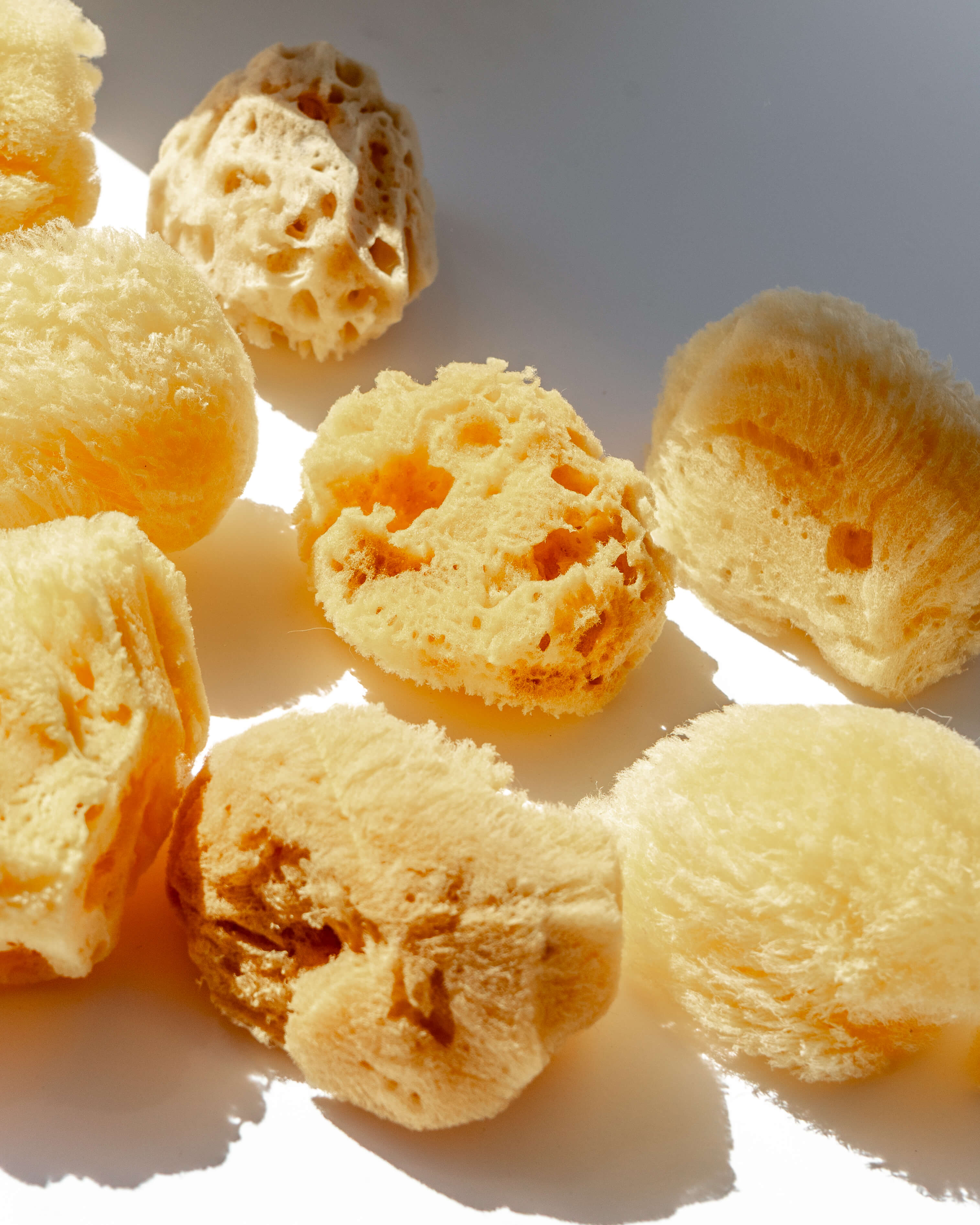
Each Natural Sea Sponge is a completely individual piece — its shape, size, texture, and fibre density uniquely its own, formed over years of growth in the natural ocean environment. Colour ranges from pale cream and warm honey through deeper tan and occasional grey-brown, with natural variations in fibre density and surface texture that speak entirely to its organic origin.
Sustainably harvested, naturally processed, and offered without any treatment, bleaching, or chemical intervention — exactly as nature produced it. Ethically sourced and selected with care.
Product Information
Product Information
Shipping & Returns
Shipping & Returns
Description
Natural Sea Sponge
There are bath and body products that are manufactured, and there are bath and body products that are simply found — grown by the natural world over years, harvested with care, and offered exactly as they are. A Natural Sea Sponge is the latter, and the difference between it and its synthetic counterparts is immediately and entirely apparent the first time it is used.
Sea sponges are among the oldest and most simple multicellular organisms on earth — living filter feeders that have existed in the world's oceans for over five hundred million years, long predating fish, insects, and almost every other form of complex life. What we use as a bath sponge is the dried, fibrous skeletal structure of this organism — a natural matrix of interconnected fibres that is simultaneously softer, more durable, more absorbent, and more sustainable than anything a factory has yet managed to replicate.
Found in the warm, clear waters of the Mediterranean, the Caribbean, and the Gulf of Mexico — with the finest bath-quality material historically sourced from the Greek islands and the Florida Keys — Natural Sea Sponges have been harvested and used for bathing since ancient Greece and Rome. Their enduring use across thousands of years of human hygiene is not sentiment. It is the simple, practical recognition that nature, given sufficient time, tends to produce better solutions than we do.
Each sponge is entirely individual — shaped by the particular conditions of its growth, the currents it filtered, and the years it took to reach its size. No two are identical in form, texture, or the particular quality of their fibre. This is not a limitation. It is the point.
Why Natural Over Synthetic
Synthetic sponges and loofahs are made from plastic or plant cellulose processed into a uniform, mass-produced form. They are inexpensive, consistent, and — in environmental, functional, and experiential terms — considerably inferior to the natural alternative.
Natural Sea Sponges are naturally hypoallergenic and free from the chemicals, dyes, and artificial binders present in synthetic products — making them ideal for sensitive, reactive, or delicate skin. Their fibre structure is uniquely gentle: firm enough to cleanse effectively, soft enough to use on the most sensitive areas without irritation.
They are naturally resistant to bacterial growth when properly cared for — their fibres containing enzymes that inhibit the growth of mould and bacteria in a way that synthetic sponges, which harbour microorganisms readily, cannot match. They last significantly longer than synthetic alternatives when given reasonable care. And at the end of their life, they biodegrade completely — returning to the ocean environment from which they came without leaving anything behind.
How to Use Your Natural Sea Sponge
- Rinse thoroughly in warm water before first use — the sponge will soften and expand considerably as it absorbs water, revealing its full size and softness
- Apply your preferred soap, body wash, or cleanser directly to the wet sponge and work into a lather before applying to the skin
- Use with gentle, circular motions — the natural fibre provides a mild, entirely natural exfoliation that removes dead skin cells and promotes circulation without the harshness of synthetic exfoliating products
- Rinse thoroughly after each use, squeeze out excess water gently — never wring — and allow to dry in a well-ventilated area away from direct sunlight
- Rinse occasionally in a dilute solution of water and white vinegar or baking soda to maintain freshness and extend the life of the sponge
- Replace when the fibre begins to break down or loses its structural integrity — a well-cared-for Natural Sea Sponge will last considerably longer than any synthetic alternative
Cleansing & Care
The key to a long-lasting Natural Sea Sponge is thorough rinsing and proper drying after every use. Squeeze — never wring — to remove excess water, and allow to air dry completely between uses in a place with good air circulation.
For a deeper clean, soak for ten minutes in a solution of warm water with a small amount of baking soda or white vinegar, rinse thoroughly, and allow to dry completely. Avoid hot water, direct sunlight, and harsh chemical cleaning products — all of which can degrade the natural fibre over time. Store in an open container or hung in a dry location rather than enclosed in a sealed bag or damp shower caddy.
Each Natural Sea Sponge is a completely individual piece — its shape, size, texture, and fibre density uniquely its own, formed over years of growth in the natural ocean environment. Colour ranges from pale cream and warm honey through deeper tan and occasional grey-brown, with natural variations in fibre density and surface texture that speak entirely to its organic origin.
Sustainably harvested, naturally processed, and offered without any treatment, bleaching, or chemical intervention — exactly as nature produced it. Ethically sourced and selected with care.